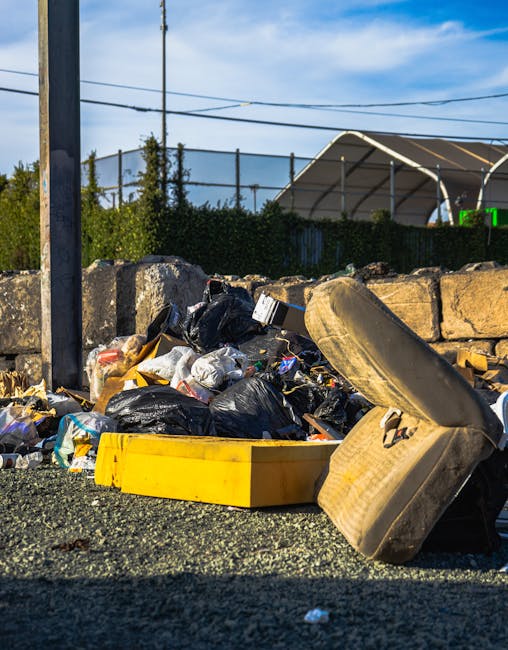
Eco friendly flat rubbish disposal solutions Central London

Flat clearance in Central London can feel like a small-scale moving day, a mini renovation, and a recycling puzzle all at once. One minute you're staring at a broken wardrobe in a tight hallway, the next you're wondering how to get rid of a mattress, old boxes, and a few bits of furniture without sending half of it straight to landfill. That's where eco friendly flat rubbish disposal solutions Central London make a real difference. They help you clear space responsibly, keep disruption down, and make sure usable items are reused before anything is thrown away.
In a city where bin stores are cramped, lifts are often tiny, and parking can be a nightmare, the "green" option is not just a nice-to-have. It is usually the practical option too. This guide explains how eco-conscious flat rubbish disposal works, what to expect, the mistakes people make, and how to choose the right approach for your home, your neighbours, and the environment.
Why Eco friendly flat rubbish disposal solutions Central London Matters
Central London flats come with their own quirks. Many people live in converted buildings, mansion blocks, or modern apartments with limited storage, shared entrances, and strict access times. So rubbish builds up quickly. A cupboard becomes a dumping ground, the spare room starts to look like a storage unit, and before long you have a job that feels bigger than it should.
The environmental side matters too. Flat rubbish is not just "rubbish". It often includes furniture, electrical items, cardboard, clothing, soft furnishings, and miscellaneous household waste. If that gets mixed together and rushed away without sorting, a lot of potential reuse is lost. That is a waste of materials, money, and energy. To be fair, nobody really wants their old sofa to end up as avoidable landfill if it could be repaired, reused, or broken down properly.
There is also the local reality. Central London streets are busy, collections need to be efficient, and neighbours notice noise and mess quickly. An eco-friendly approach usually means fewer trips, better sorting, cleaner loading, and less disruption outside the building. It's calmer. More considerate. And, frankly, it tends to feel better when the flat is finally clear.
If your clear-out is part of a wider move or property reset, it can help to think beyond one room. Many residents combine flat clearance with broader home clearance or even targeted removal of bulky pieces like chairs and wardrobes through furniture disposal. That joined-up approach often makes the whole job cleaner and more efficient.
How Eco friendly flat rubbish disposal solutions Central London Works
At heart, eco-friendly disposal is about sorting, recovering, and removing waste in the least wasteful way possible. The process usually starts with a quick assessment of what you actually have. Is it general household rubbish? Bulky furniture? Mixed junk from a flat move? A few repairable items? Once that is clear, the waste can be split into practical streams.
The best approach usually follows a simple order:
- Reuse first - items that are clean, safe, and functional should be kept in circulation where possible.
- Separate recyclables - cardboard, metal, some plastics, textiles, and wood may be recoverable depending on condition and local processing routes.
- Handle bulky items properly - sofas, wardrobes, mattresses, and white goods need careful removal to avoid damage or contamination.
- Dispose of residual waste responsibly - only what cannot be reused or recycled should be treated as final waste.
In practical terms, that can mean a team arrives with the right vehicle, removes items from the flat with as little disruption as possible, and then sorts them rather than simply tipping everything together. That sorting stage is where the environmental value really happens.
For flats in busier parts of the city, local area knowledge is useful too. Access on narrow streets near Central London, or around places like Shoreditch, Holborn, or Covent Garden, can affect how the job is planned. A good operator works around that instead of pretending it doesn't matter. It always matters.
Sometimes the disposal job overlaps with other categories. A tenant moving out after renovation might need builders waste removed along with old household contents. Someone clearing a rented studio near King's Cross may also have office-style items or packaging to shift. The more accurately the waste is identified, the more of it can be routed responsibly.
Key Benefits and Practical Advantages
There is a temptation to think "eco-friendly" just means "less harmful". That's true, but it sells the idea short. Done well, it brings everyday practical benefits too.
- Less landfill waste - reusable and recyclable items are kept out of the final waste stream where possible.
- Better use of space - a flat can be cleared faster when items are sorted properly from the start.
- Reduced stress - no one enjoys watching a corridor fill up with bags and broken furniture. A tidy process helps.
- Lower disruption - careful loading and planned collections are less noisy and less chaotic for neighbours.
- Cleaner handover - useful for end-of-tenancy moves, refurbishments, or sale preparation.
- More responsible handling - electrical items, upholstery, and mixed waste are dealt with in a more considered way.
There is also a financial upside, though it depends on the volume and type of waste. If items can be reused or collected efficiently in one visit, the overall job can be more cost-effective than a series of ad hoc trips to different disposal points. Not glamorous, maybe. But sensible.
For people with heavier or awkward items, using a specialist service can avoid injury and damage to walls, lifts, and doorframes. A lot of flat clear-outs go wrong because someone tried to carry a wardrobe down three flights of stairs on their own. It sounds heroic until the banister gets scratched and everyone is grumpy.
Who This Is For and When It Makes Sense
This kind of service is not only for people who are moving house. In fact, many of the most useful jobs are smaller and more ordinary. A flat slowly fills up; then one day you realise the place is doing too much work as storage. That is when eco-friendly disposal makes sense.
It is especially useful for:
- tenants preparing for end-of-tenancy checks
- landlords clearing left-behind items
- homeowners who are decluttering after a long stay in one property
- people handling a bereavement or sensitive clearance
- students or sharers leaving a furnished flat
- anyone replacing old furniture or bulky household items
It also works well when you need a focused service rather than a broad clear-out. For example, you might only need sofa removal, a few pieces of old furniture taken away, or a general rubbish removal visit after a flat tidy-up. Small jobs still benefit from a greener method, and honestly they are often the ones that get ignored for too long.
If your property is in one of the city's mixed residential and commercial pockets, such as Bishopsgate, Farringdon, or Blackfriars, the ability to work around transport, loading, and building access matters even more.
Step-by-Step Guidance
Here is a straightforward way to tackle a flat clearance without making it harder than it needs to be. Nothing fancy. Just a practical sequence that saves time and waste.
- Walk through the flat room by room. Make a quick note of bulky items, reusable items, broken items, and anything that might need special handling.
- Set aside anything worth keeping. Be strict here. Half-kept, half-thrown items create confusion later.
- Separate obvious recyclables. Flatten cardboard, bag loose textiles, and group similar materials where possible.
- Identify hazardous or awkward items. Batteries, paint tins, and damaged electricals should not be mixed casually with general rubbish.
- Measure access routes. Check stairs, lift size, doorway width, and any time restrictions for the building.
- Plan one efficient collection. A single coordinated removal is usually better than several half-finished trips.
- Ask how items will be sorted after collection. If reuse, recycling, and disposal all matter to you, say so upfront.
The best clear-outs are usually boring in the best possible way. They are calm, organised, and done in one go. The flat looks better. The waste is handled better. Everyone sleeps easier afterwards.
If you have a mix of domestic and business waste, or you are clearing a home office corner as well as a bedroom, it may help to consider related services such as office clearance or business waste handling. That is especially useful for freelancers and hybrid workers in smaller Central London flats. We see that pattern a lot.
Expert Tips for Better Results
Experience teaches a few small things that make a big difference. The first is that early sorting saves far more time than people expect. The second is that access problems are usually the real headache, not the rubbish itself.
Here are a few tips that tend to work well:
- Use clear piles, not vague intentions. "Keep", "donate", "recycle", and "remove" are enough categories for most flats.
- Don't overpack bin bags. Overfilled bags are awkward to lift and easy to split in hallways.
- Protect shared spaces. In blocks with nice flooring or narrow lifts, a careful route matters more than you think.
- Remove dismantled items if possible. Flat-pack furniture is far easier to move when broken down first.
- Photograph large items before collection. This helps confirm what needs removing and avoids misunderstandings.
- Think about reuse with a cool head. If an item is truly usable, it should stay in circulation. If it is chipped, unsafe, or very worn, be realistic.
A small note from lived experience: many people keep one or two "maybe useful" items for months, just in case. Then the item becomes part of the scenery. If you haven't used it in a year and it only survives on optimism, perhaps it's time.
For properties with gardens, garages, or storage rooms attached to a flat, a broader clear-out may need multiple streams. In that situation, services like garage clearance or garden clearance can complement a flat disposal plan without creating a mess of separate arrangements.
Common Mistakes to Avoid
Most problems come from rushing. That's the honest answer. People underestimate the volume, forget access issues, or assume everything can be treated the same way. Not quite.
- Mixing everything together - once materials are blended, reuse and recycling become much harder.
- Leaving the sort-out until collection day - that is how jobs run late and the flat turns into a bottleneck.
- Ignoring bulky waste rules - large items often need special handling and should not be dumped casually.
- Forgetting building restrictions - lifts, loading bays, quiet hours, and concierge rules can affect timing.
- Assuming "eco-friendly" means "any collection is fine" - the process matters as much as the promise.
- Not checking the final destination of waste - you want confidence that reusable items are treated as reusable, not just moved along the chain.
Another subtle mistake is trying to do too much at once. You do not need a perfect system. You need a workable one. That's a big difference. A flat clearance that is 80% organised is usually far better than a "perfect plan" that never starts.
Tools, Resources and Recommendations
You do not need a van full of equipment to prepare for a flat clearance, but a few simple tools can make the process easier and greener.
- Strong reusable bags or boxes for sorting smaller items
- Labels or marker pens to mark keep/recycle/remove piles
- Basic hand tools for dismantling flat-pack furniture
- Gloves for handling dusty, sharp, or awkward items
- Measuring tape if you need to check access for bulky furniture
- Waste sacks and tape for tidy, secure packing
For actual collection and disposal, the most useful "resource" is a service that understands both the property type and the material mix. That may mean choosing a provider that offers rubbish clearance, waste collection, or waste removal depending on how much and what type of material you have.
If the job is sensitive, such as a probate clearance or a long-occupied flat with mixed contents, it can also help to read the provider's company information and policies. Pages like about us and terms and conditions can tell you a lot about how carefully a company operates. Slightly dull, yes, but worth it.
Law, Compliance, Standards, or Best Practice
For rubbish disposal in the UK, the key principle is simple: waste should be handled responsibly and passed to people or systems that are authorised to deal with it. You do not need to become a compliance expert, but you should expect a clear, lawful process.
Best practice usually includes:
- keeping different waste types separate where possible
- avoiding illegal dumping or fly-tipping risks
- ensuring electrical items and bulky goods are handled appropriately
- using a provider that can explain where waste goes in broad terms
- being careful with items that may contain hazardous components
If you are clearing a rented flat, you may also have building, tenancy, or lease obligations to think about. Those are not the same thing as waste law, but they overlap in practice. For example, leaving rubbish in a communal hallway or outside a property can cause problems quickly. In busy areas such as Strand, St Paul's, or Temple, that kind of mistake tends to be noticed fast.
Good best practice is often unglamorous: arrive on time, remove waste neatly, separate what can be recycled, and leave the place clean. Simple. But it is the difference between a tidy clearance and a headache.
Options, Methods, or Comparison Table
There is more than one way to deal with flat rubbish, and the right choice depends on time, volume, item type, and how much control you want over the process.
| Method | Best for | Eco impact | Practical notes |
|---|---|---|---|
| Self-sorting and council-style disposal | Very small amounts of waste | Can be good if items are separated properly | Time-consuming, and not ideal for bulky items or flats with poor access |
| Charity or reuse first, then disposal | Furniture and usable household items | Excellent when items are genuinely reusable | Requires items to be clean, safe, and accepted by the receiving organisation |
| Mixed rubbish collection | General household clear-outs | Moderate, depending on sorting standards | Convenient, but quality depends on how the load is separated afterwards |
| Specialist eco-focused flat clearance | Bulky, mixed, or time-sensitive jobs | Usually strongest when reuse and recycling are built into the process | Best for flats with access challenges, furniture, or a larger volume of items |
For most Central London flats, a specialist approach is the most realistic balance between convenience and responsibility. Especially where a single room turns into a surprisingly big job. You know how it goes: "just a few things" becomes three chairs, a mattress, two lamps, and a box of mystery cables.
Case Study or Real-World Example
Imagine a one-bedroom flat near Barbican. The occupant is moving out after several years and needs the place cleared before handover. The flat includes a sofa, a coffee table, two bookcases, a broken desk chair, old bedding, packaging from recent purchases, and a small stack of items that could still be reused.
Instead of bagging everything together, the job is split into three groups: reusable items, recyclable materials, and residual waste. The sofa is checked for removal and handled as part of a broader sofa removal and furniture disposal process. Cardboard is flattened. The reusable lamps and tableware are kept separate. The broken chair and mixed waste are loaded last.
The practical result is straightforward: the flat is left tidy, the hallway is not clogged for long, and useful items are not treated like rubbish by default. The resident gets a cleaner handover, and the waste stream is a bit lighter. Not a huge drama, just a good outcome.
That sort of careful, ordinary efficiency is the whole point. In a dense city, a well-handled flat clearance can save time, reduce stress, and quietly do the right thing in the background.
Practical Checklist
Use this quick checklist before any flat rubbish collection or clearance:
- Have I separated keep, donate, recycle, and remove piles?
- Are there any bulky items that need special handling?
- Have I checked lift access, stairs, and parking or loading rules?
- Are there any electrical items, batteries, paints, or other sensitive materials?
- Do I know which items are definitely reusable and which are not?
- Is the route from the flat to the vehicle clear?
- Have I confirmed the time slot and building access with everyone involved?
- Do I need related services such as waste clearance or waste disposal?
- Have I protected floors, doors, or communal areas if needed?
- Have I asked how the collected items will be sorted afterwards?
If you can tick most of those off, the job will usually go much more smoothly. Simple again. Which is nice for once.
Get a free quote today and see how much you can save.
Conclusion
Eco friendly flat rubbish disposal solutions in Central London are really about making one awkward job easier to live with. They help you clear clutter without creating more of it elsewhere. They also fit the reality of city flats: limited space, shared access, busy streets, and the need to be considerate as well as efficient.
If you plan carefully, separate items sensibly, and choose a service that prioritises reuse and recycling where possible, the whole process becomes far less stressful. And your flat feels different afterwards. Lighter, quieter somehow. That empty corner is not just empty; it is a bit of breathing room.
That is the goal, really. A clear flat, a cleaner process, and a small but meaningful step towards doing things properly.
Frequently Asked Questions
What counts as eco friendly flat rubbish disposal in Central London?
It usually means sorting waste so reusable items are reused, recyclable items are separated, and only the remaining waste is sent for final disposal. The goal is to reduce landfill and handle everything more responsibly.
Is flat clearance more environmentally friendly than doing it yourself?
It can be, especially if the service sorts items for reuse and recycling properly. DIY disposal can work for tiny jobs, but it often becomes inefficient when bulky items or mixed waste are involved.
What kind of items can usually be reused?
Clean furniture, usable household goods, some decor, and items in decent condition may be suitable for reuse. Anything damaged, unsafe, or heavily worn is less likely to be reusable.
Can old sofas and mattresses be disposed of responsibly?
Yes, but they often need specialist handling because of their size and material mix. A proper removal service can help route them through the right disposal or recovery channels.
How do I prepare a flat for an eco friendly clearance?
Start by separating keep, donate, recycle, and remove items. Clear access routes, dismantle furniture where possible, and identify anything that needs special handling before the collection day.
What if I live in a building with a tiny lift or narrow staircase?
That is very common in Central London. A good team will plan for access limitations, protect shared areas, and use a removal method that keeps disruption as low as possible.
Are eco friendly disposal solutions suitable for end-of-tenancy clear-outs?
Yes, and they are often a very good fit. They help tenants, landlords, and agents deal with leftover furniture and rubbish in a tidy, accountable way.
Do I need to separate recycling myself?
It helps, but the level of sorting depends on the service. The more you separate beforehand, the easier it is to improve recycling and reuse outcomes.
What should I ask a clearance provider before booking?
Ask how items are sorted, whether reuse is considered first, how bulky waste is handled, and what types of rubbish they accept. If they can explain the process clearly, that is usually a good sign.
Is this only for large flat clearances?
No. Even one sofa, a few bags of rubbish, or a small bedroom clear-out can benefit from a greener approach. Small jobs matter too, to be fair.
How quickly can a flat be cleared?
That depends on the volume, access, and item type. A small flat can sometimes be handled very quickly, while larger or more cluttered properties need more time and planning.
Why is Central London harder for rubbish disposal than other areas?
Access, parking, stairs, timing, and building rules can all make disposal more complex. That is why local knowledge and an organised removal process are so useful in the city.